

Why the Hyundai Boulder Concept is Turning Heads
April 18 2026,
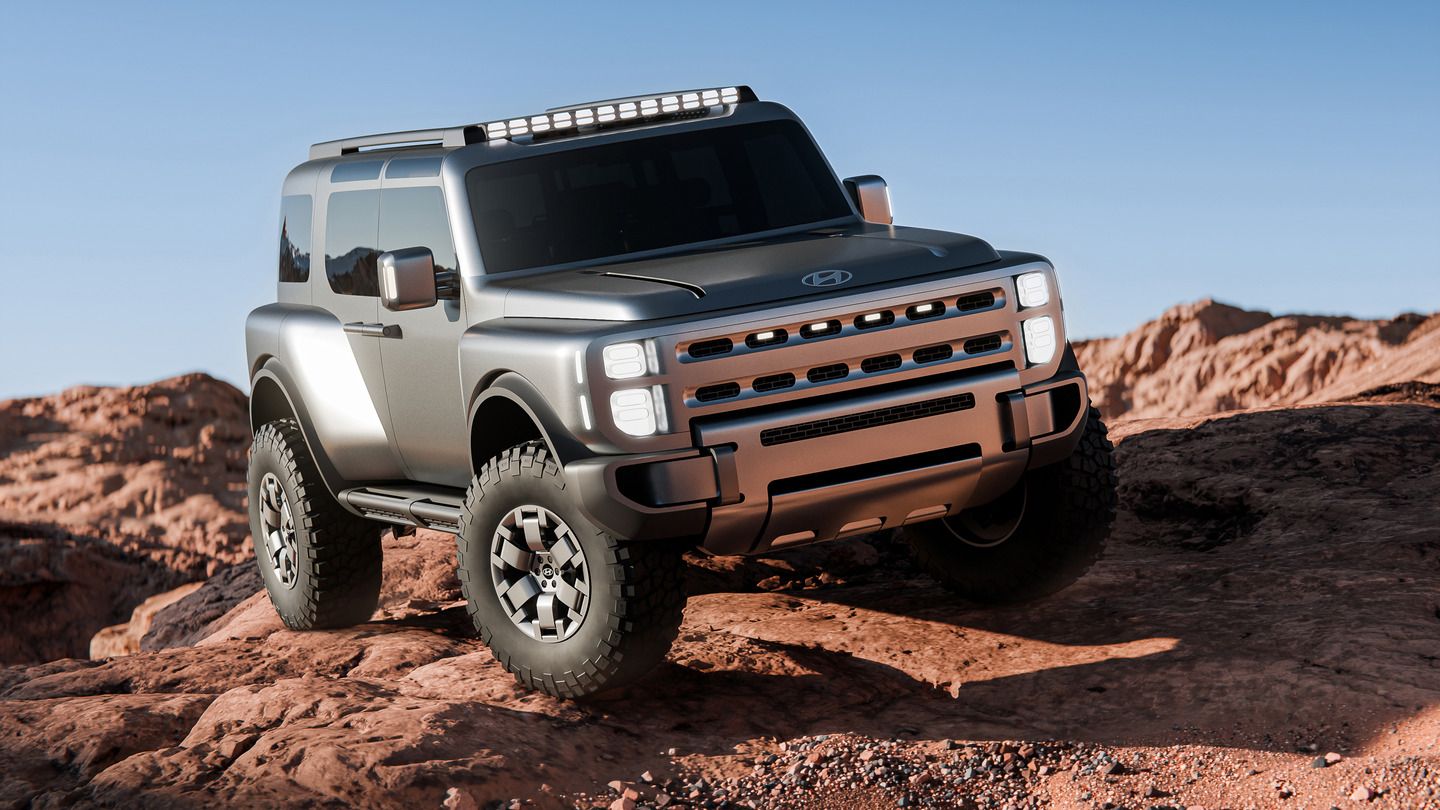
Hyundai just unveiled something the brand has never built before: a body-on-frame SUV. The Boulder Concept made its surprise debut at the 2026 New York International Auto Show, previewing Hyundai's first North American body-on-frame vehicle - a midsize pickup truck arriving by 2030. This isn't a production model. It's a design study that shows where Hyundai is headed in the off-road and truck segments.
The Boulder Concept is built on ladder-frame-style construction, the same architecture that underpins serious off-road vehicles like the 4Runner and Wrangler. It rides on oversized 37-inch mud-terrain tires - enough to handle trails that would stop most crossovers. The exterior wears a Liquid Titanium finish that catches light like brushed metal, and the upright two-box silhouette gives it a commanding presence. This is Hyundai's answer to buyers who want genuine off-road capability, not just the appearance of it.
Art of Steel Design Language
The Boulder Concept introduces Hyundai's "Art of Steel" design philosophy. This approach transforms the strength and flexibility of steel into sculptural forms with precise lines and flowing volumes. Inspired by Hyundai Steel's advanced alloy technologies, the design emphasizes the material's natural formability. The result is a vehicle that looks both powerful and refined - a balance between rugged utility and modern aesthetics.
The exterior features dual safari-style fixed upper windows that flood the cabin with natural light and provide unobstructed views of the surroundings. Coach-style doors open from the centre, making it easier to load gear into both rows. A low-profile roof rack includes steel webbing between the rails for extra cargo-carrying capability. Reflective tow hooks and door handles make the vehicle easier to spot in low light after a day on the trails.
Off-Road Hardware and Features
The Boulder Concept rides on 37-inch mud-terrain tires (37x12.50R18 LT), which provide generous ground clearance and the ability to clear obstacles that would stop smaller vehicles. A tailgate-mounted full-size spare ensures you're prepared for punctures on remote trails. The double-hinged rear tailgate opens from either side, accommodating different loading scenarios. A power drop-down rear window on the tailgate handles extra-long cargo and enables flow-through ventilation when the vehicle is moving.
Aggressive approach, departure, and breakover angles enhance the Boulder Concept's off-road agility. A generous fording depth helps it cross shallow water crossings safely. From the driver's seat, an available software-driven real-time off-road guidance system acts like a digital spotter, helping you navigate difficult terrain with confidence.
The Boulder Concept has been designed as a blank canvas for accessories. Owners can add functional upgrades that reflect their personal needs and style, whether that's additional lighting, storage solutions, or recovery equipment.
Interior Design and Functionality

Inside, the Boulder Concept uses robust materials for high-wear areas like grab bars and frequently used controls. Physical knobs and buttons are positioned within easy reach, making them easier to operate when bouncing over uneven terrain. The configurable interior supports different activities - unique fold-out tray tables work for a quick lunch on the trail or for finishing work in the field.
The interior design prioritizes durability and usability over luxury. This is a vehicle built for people who use their SUVs as tools, not just transportation.
What This Means for Hyundai's Future
The Boulder Concept is a design study, not a production vehicle. But it previews Hyundai's first North American body-on-frame platform, which will underpin a production midsize pickup truck arriving by 2030. Hyundai has confirmed that future body-on-frame vehicles will be designed, developed, and built in North America using Hyundai-produced U.S. steel.
Hyundai is entering the midsize pickup segment - a category it has never competed in before. The Boulder Concept's construction, proportions, and functional priorities all point toward a production truck designed for serious towing, hauling, and off-road capability.
Hyundai is targeting buyers who need genuine body-on-frame capability, not just the appearance of ruggedness. This is a segment dominated by established players, and Hyundai is entering with purpose-built hardware and a clear understanding of what North American buyers expect from a midsize truck.
The Boulder Concept Shows Hyundai's New Direction
The Boulder Concept is Hyundai's clearest statement yet about its intentions in the truck and off-road segments. It's a design study built on ladder-frame-style construction with genuine off-road hardware, not a crossover with cladding. The Art of Steel design language, the 37-inch tires, the double-hinged tailgate, and the software-driven off-road guidance system all point toward a brand that understands what serious off-road buyers expect.
The production midsize pickup truck arriving by 2030 will be designed, developed, and built in North America. Hyundai is entering a segment it has never competed in before, and the Boulder Concept shows it's doing so with purpose-built capability and a clear understanding of the market.
If you're interested in learning more about Hyundai's future body-on-frame vehicles or exploring the current Hyundai lineup, visit Central Nova Hyundai in New Glasgow.