

What the Turbocharged Engine Adds to the 2026 Hyundai Elantra N Line Ultimate
October 22 2026,
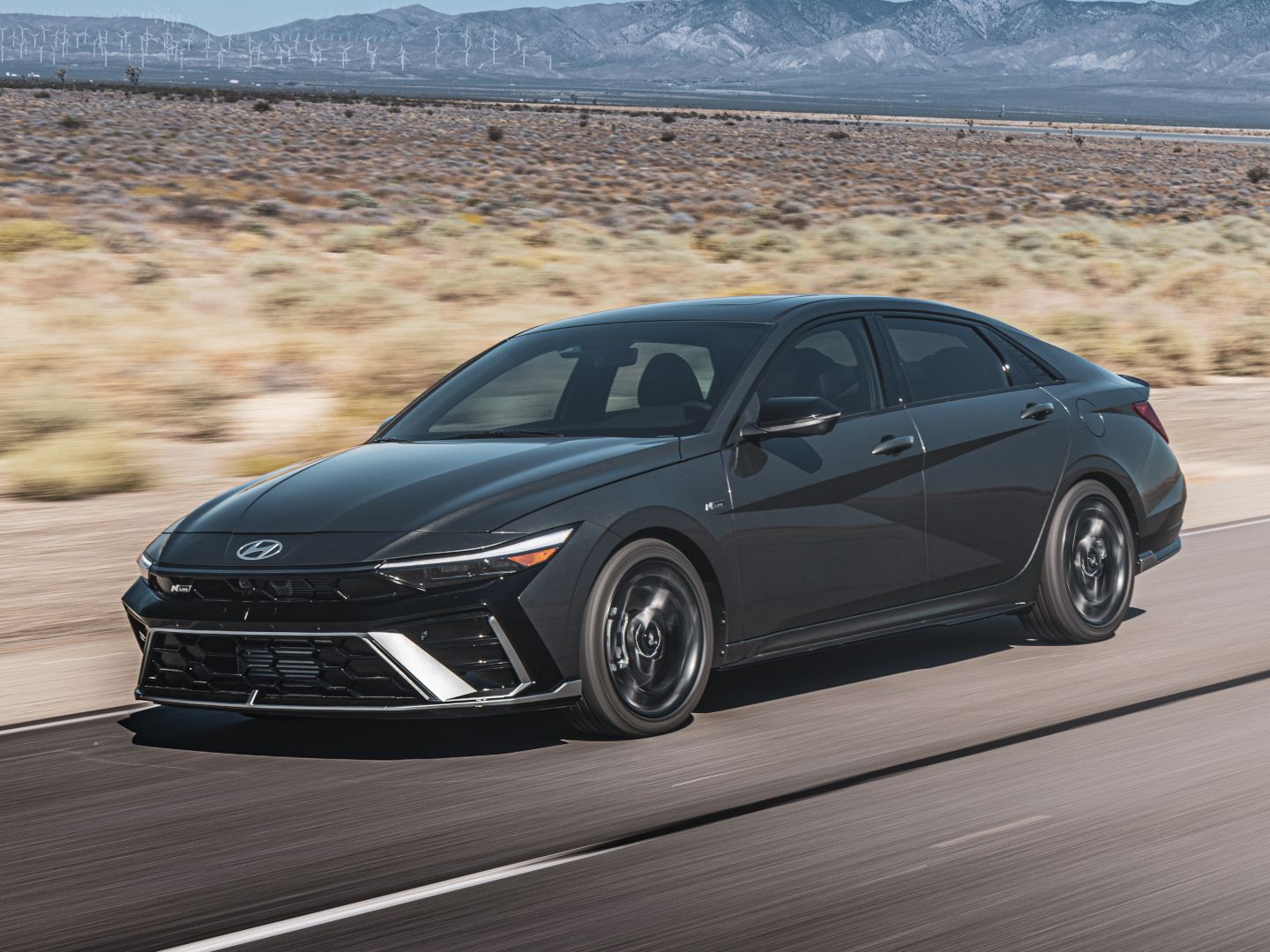
Nova Scotia drivers cross-shopping compact sedans often land on the same question: does the sportier Elantra actually drive differently, or is it just badges and wheels? The 2026 Elantra N Line Ultimate answers that with its engine.
Most Elantra trims share the same 2.0 L engine tuned for efficient, predictable commuting. The N Line Ultimate breaks from that formula with a turbocharged 1.6 L engine built for a different kind of drive. This piece breaks down what that swap actually changes behind the wheel, not just on a spec sheet.
What the N Line Ultimate Brings To The Lineup
The N Line Ultimate sits at the top of the Elantra sedan trim walk, and its engine is the clearest signal of that position. Where the Essential, Preferred, and Luxury trims run a 2.0 L four-cylinder making 147 hp and 132 lb-ft of torque through an Intelligent Variable Transmission, the N Line Ultimate swaps in a 1.6 L turbocharged four-cylinder rated at 201 hp and 195 lb-ft of torque.
That’s a meaningful jump in both figures, and it comes paired with a 7-speed Dual Clutch Transmission instead of the IVT used elsewhere in the lineup.
|
Spec |
Essential (2.0 L) |
N Line Ultimate (1.6 L Turbo) |
|
Horsepower |
147 hp |
201 hp |
|
Torque |
132 lb-ft |
195 lb-ft |
|
Transmission |
Smartstream IVT |
7-Speed DCT |
|
Wheels |
15-inch alloy |
18-inch alloy |
|
Combined fuel economy |
6.8 L/100 km |
7.6 L/100 km |
How The Turbo Engine And DCT Work Together
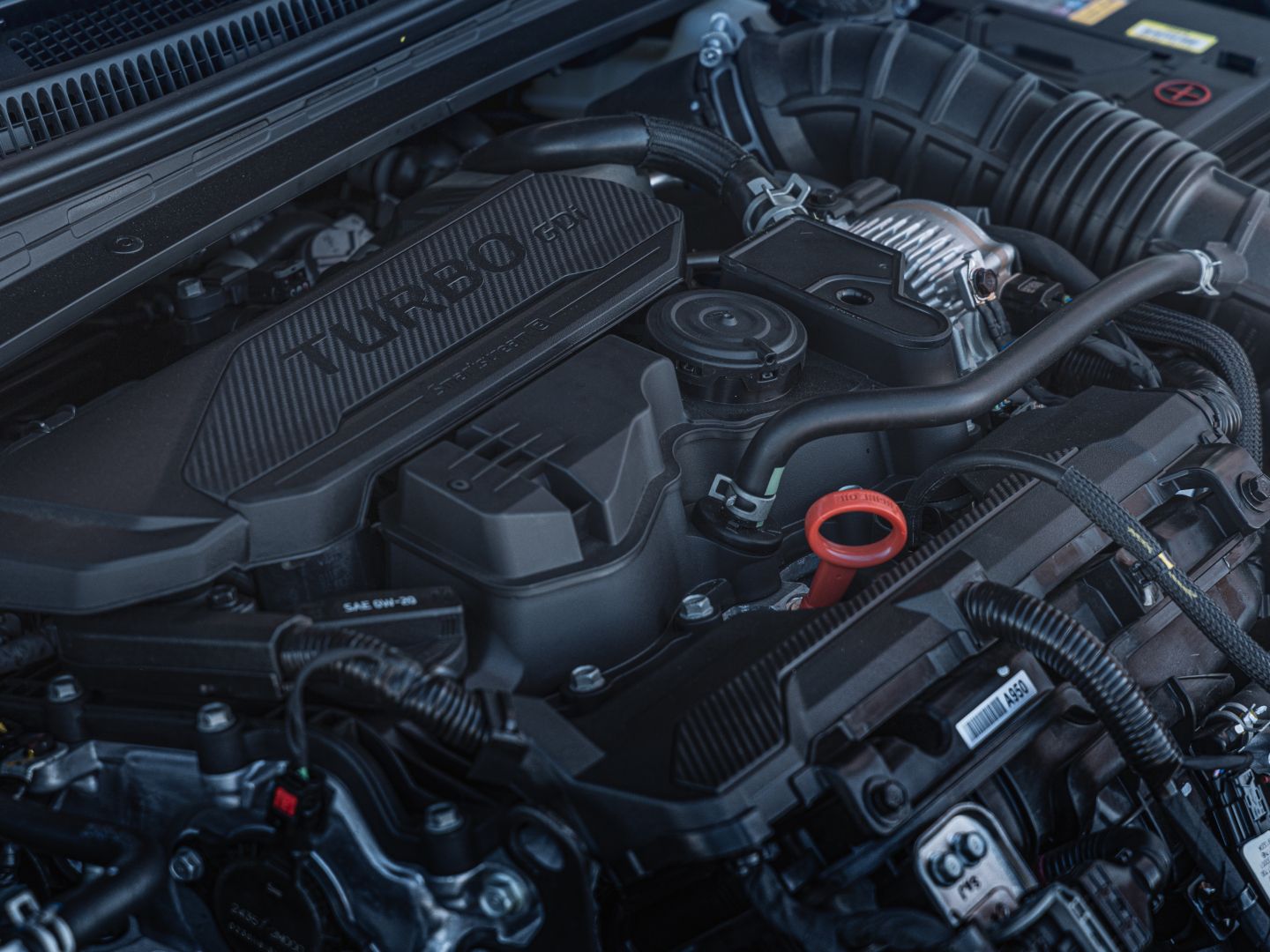
The torque number tells the real story here. The N Line Ultimate’s 195 lb-ft arrives between 1,500 and 4,500 rpm, a wide band that keeps pulling power available across normal driving speeds instead of only near redline.
The 7-speed DCT is built to use that band. It swaps gears quickly and holds the engine closer to where the turbo is already making torque, rather than letting revs drop and wait to build boost again. Paddle shifters let the driver hold a gear through a corner or a merge instead of waiting on an automatic to decide.
Compare that to the Essential’s IVT, which is tuned around smoothness and fuel economy with the naturally aspirated 2.0 L engine. It’s a calmer partner for a torque curve that peaks much higher in the rev range at 132 lb-ft.
Why It Matters In Everyday Driving
This isn’t a track-focused difference. It shows up in ordinary moments: pulling into traffic, merging onto a highway on-ramp, or passing a slower vehicle on a two-lane road. The extra torque low in the rev range means the throttle responds sooner, so the driver isn’t waiting for the engine to build speed before it reacts.
Highway passing benefits the most. With 201 hp and a transmission built to hold gears where torque is strongest, the N Line Ultimate has more in reserve for a quick pass than the 147 hp non-turbo engines offer.
That reserve also matters with a full car. Carrying passengers or cargo adds weight the engine has to move, and the turbo’s added output gives the car more margin before that load starts to feel noticeable. The trade-off is fuel economy: the N Line Ultimate is rated at 7.6 L/100 km combined against 6.8 L/100 km for the 2.0 L Essential, a gap worth weighing for anyone whose driving is mostly commuting rather than backroads.
The Chassis And Brakes Behind The Power
A stronger engine on its own can feel unfinished if nothing else about the car changes. Hyundai didn’t stop at the engine swap. The N Line Ultimate adds sport-tuned suspension and steering, a multi-link independent rear suspension in place of the torsion axle used on the gas trims, and larger disc brakes, up an inch front and rear over the standard setup.
Those changes matter because a 201 hp turbo car needs to slow down and turn as confidently as it accelerates. Larger brakes give the driver more consistent stopping performance, especially useful with the added weight and speed the turbo engine can generate. The multi-link rear suspension also changes how the car settles through corners compared to the simpler torsion axle setup on the Essential, Preferred, and Luxury trims.
18-inch alloy wheels round out the package, replacing the 15 to 17-inch wheels found elsewhere in the lineup.
Cabin And Exterior Cues That Match The Engine
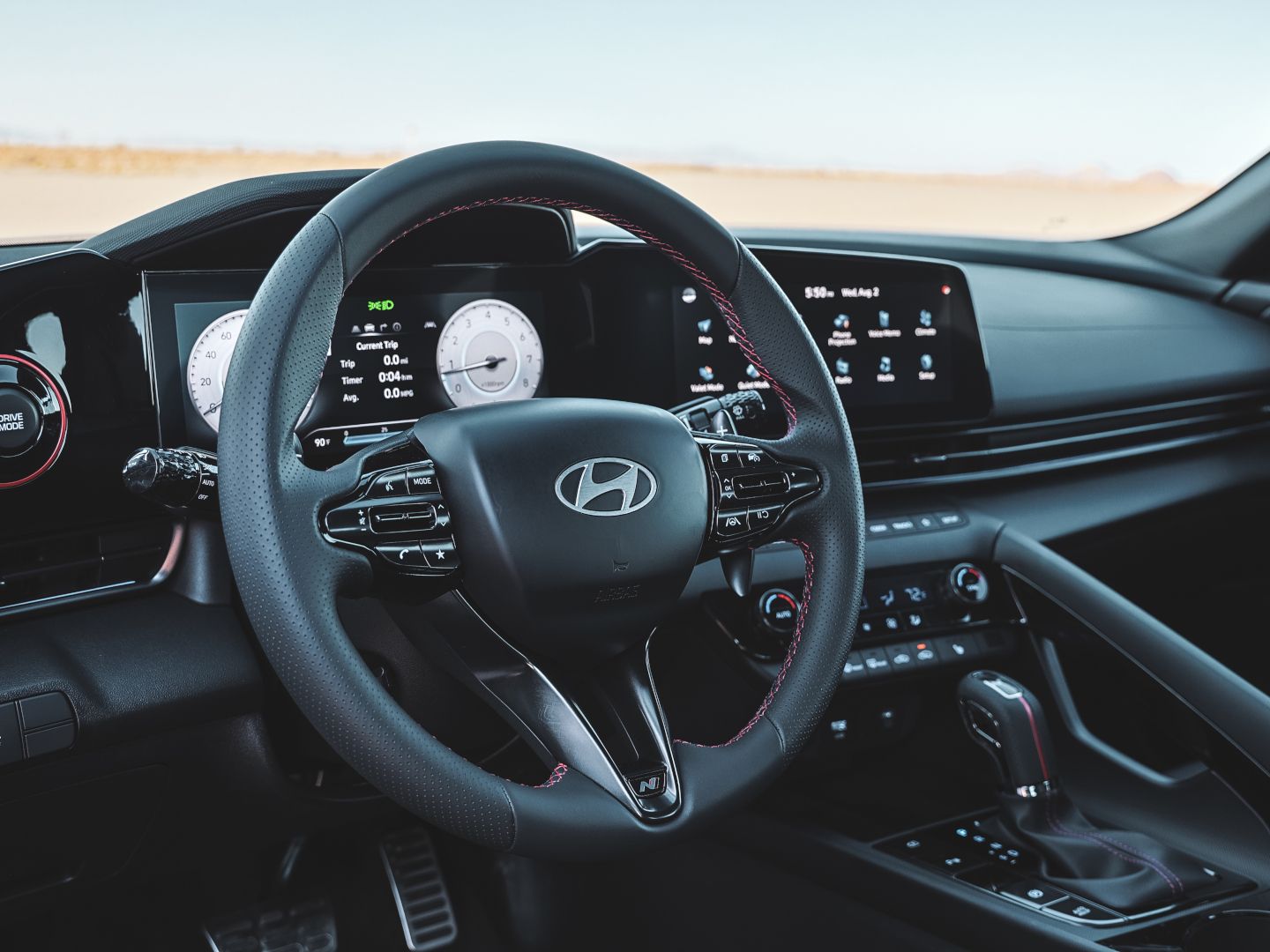
The N Line Ultimate doesn’t hide its focus. Sport leather seats with red stitching, a power 8-way driver’s seat with lumbar support, aluminum sport pedals, and a black interior headliner set the cabin apart from other Elantra trims. Outside, an N Line-exclusive front fascia, dark chrome grille, glossy black trim, a rear diffuser, and a chrome dual-tip exhaust outlet mark the car before anyone even hears the engine.
These details reinforce that the engine upgrade isn’t a standalone mechanical change. It’s one part of a sport sedan package that carries through the seats, the pedals, and the way the car looks parked in a driveway.
Who The N Line Ultimate Fits Best
The N Line Ultimate makes the most sense for a driver who wants a compact sedan that feels more energetic day to day, someone who notices throttle response on a highway on-ramp or values sharper steering on a winding road. Drivers who prioritize maximum fuel economy above all else are better served by the 2.0 L Essential or the Luxury Hybrid’s 4.7 L/100 km combined rating.
For commuting, weekend drives, and highway travel around Nova Scotia, though, the turbo engine and its supporting chassis work give the N Line Ultimate a different personality than the rest of the Elantra range, without asking the driver to give up the practicality of a compact sedan.
Getting Behind The Wheel At Central Nova Hyundai
The 2026 Elantra N Line Ultimate pairs a 201 hp turbocharged engine with a 7-speed DCT, sport-tuned suspension, and larger brakes to give the Elantra sedan a sportier character than its non-turbo trims. The changes run through the chassis and cabin, not just the spec sheet.
Visit Central Nova Hyundai in New Glasgow to sit in the N Line Ultimate and feel how the turbo engine and DCT respond on the road for yourself.